
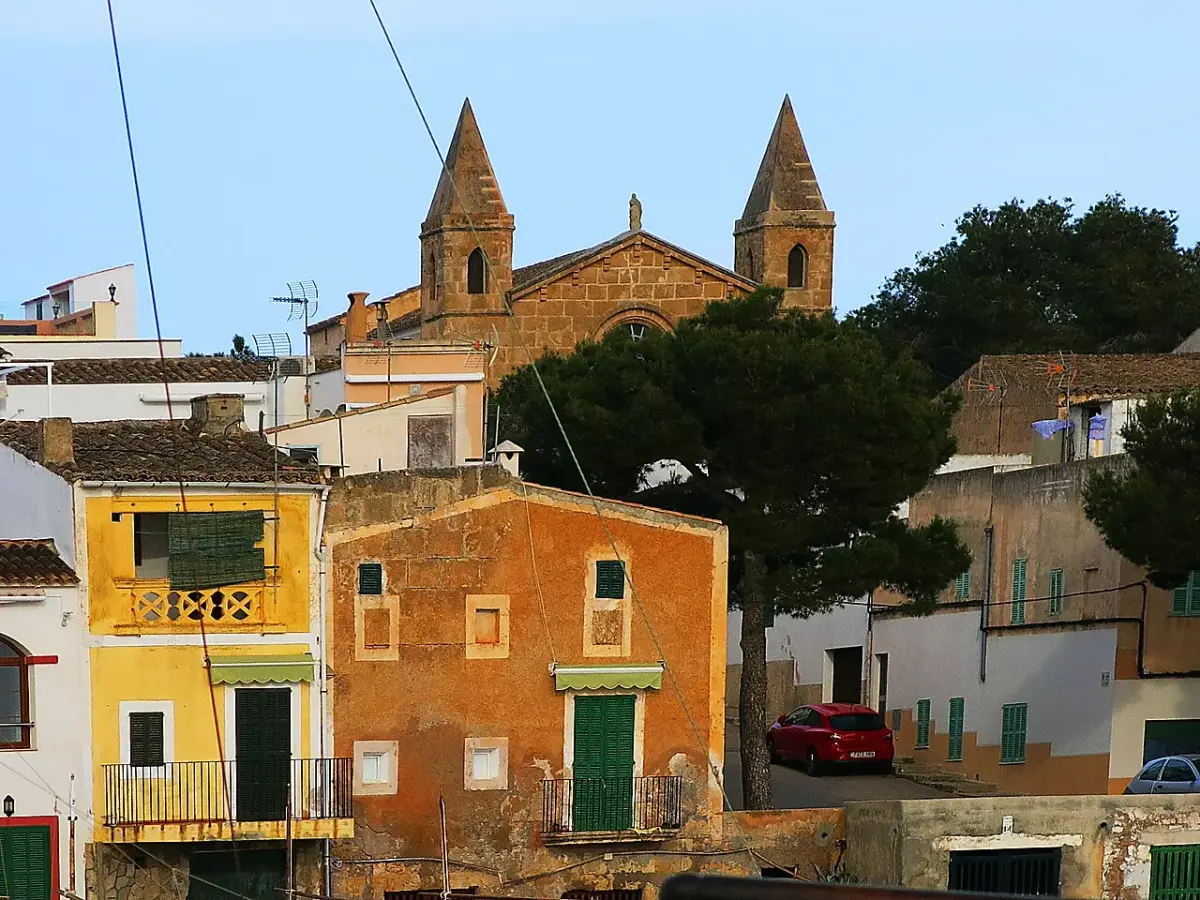
Portocolom has no single great monument and no compact old town. What you come to see is the harbour: a large, sheltered bay with low houses right on the water, moored llaüts and little boathouses. The town spreads around the bay, so it makes most sense in parts: the old harbour, the lighthouse and the beach area to the south around Cala Marçal.
The harbour and Es Riuetó
Start at the harbour. In the old part, north of the quay, is Es Riuetó: a row of brightly painted terraced houses, a jetty and the barraques, the boathouses with ramps where the llaüts were kept in winter. It’s the best-known view of the town and a lived-in neighbourhood, not a stage set, so take it slowly and respectfully.
The bay explains the town’s past as a boat shelter and the port for Felanitx’s wine before tourism arrived; the history of the harbour tells the story. In 1922 the planes of a short-lived seaplane school landed on these waters.
The old quarter and the Carme church
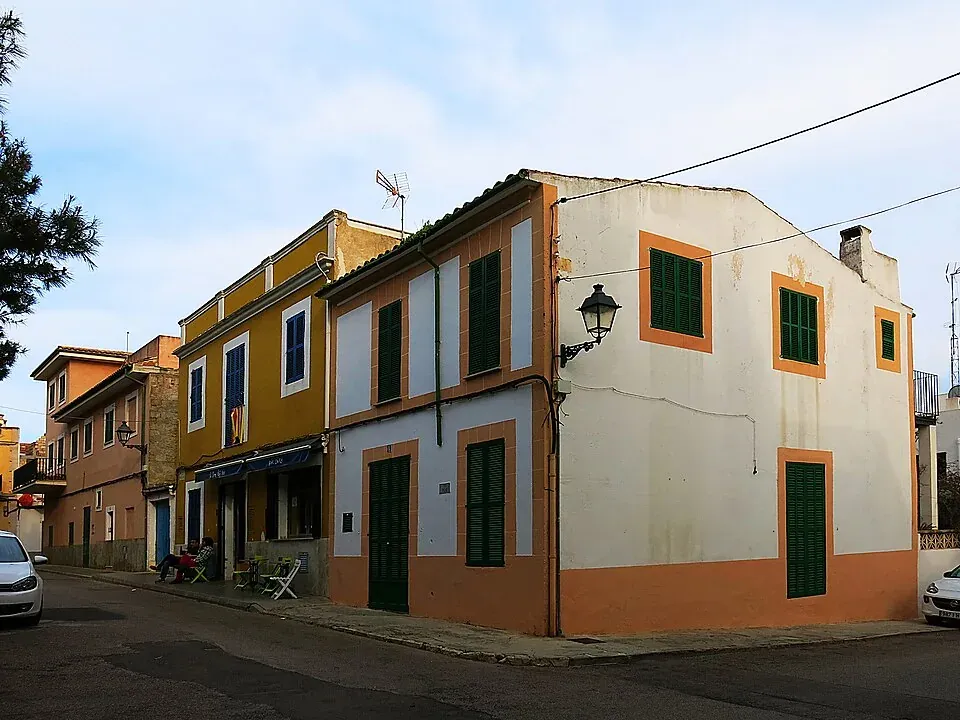
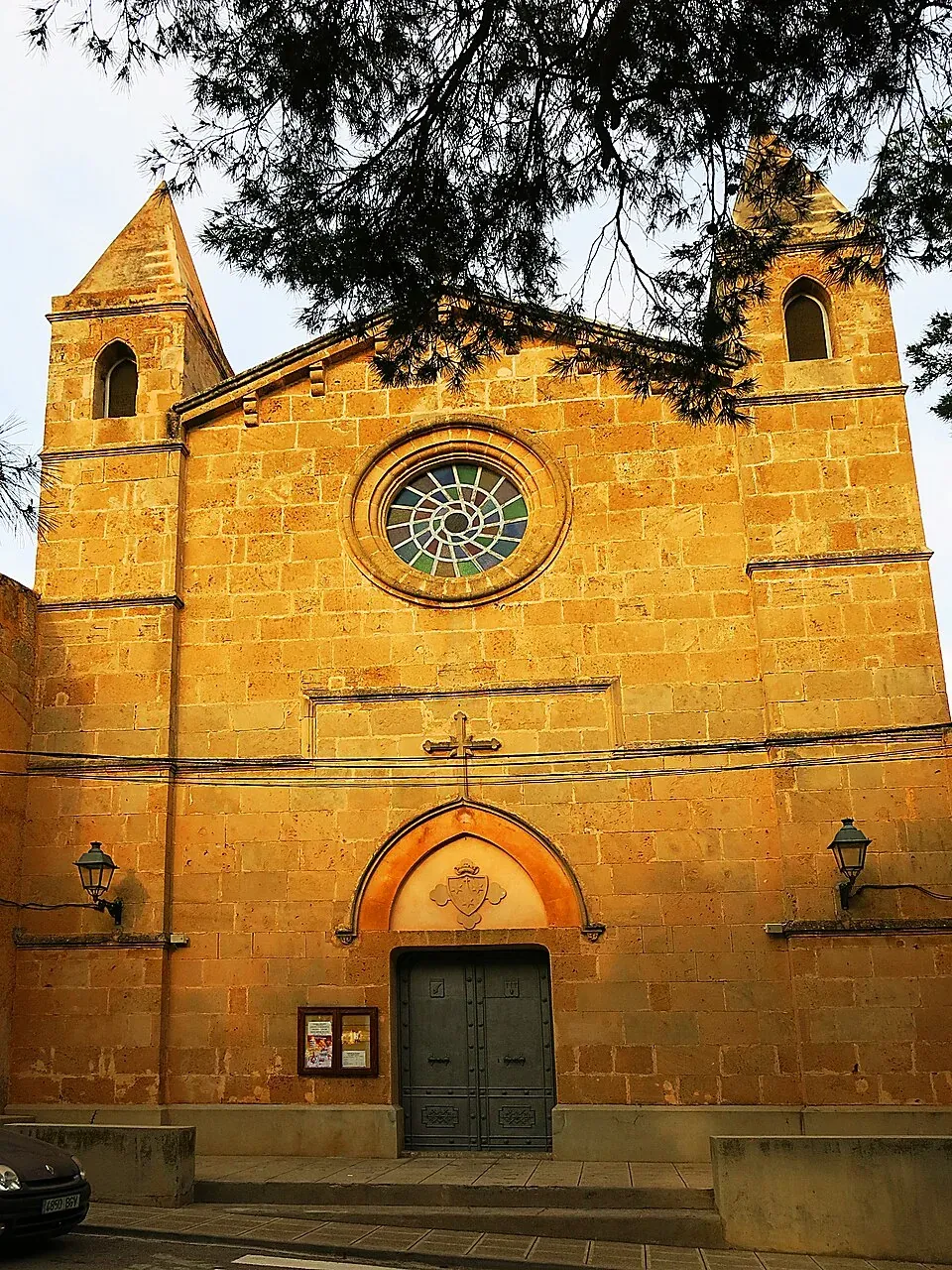
Behind the harbour are the oldest streets, around Plaça de Sant Jaume and Carrer d’en Velar, with one- and two-storey houses and green shutters. The church of the Mare de Déu del Carme, patron saint of fishermen and sailors, anchors the neighbourhood; on 16 July it is the focus of the Carme fiesta, with a procession of boats around the bay.
The full walk, with the sa Duana quay and the boathouses, is in old town and old harbour.
The lighthouse
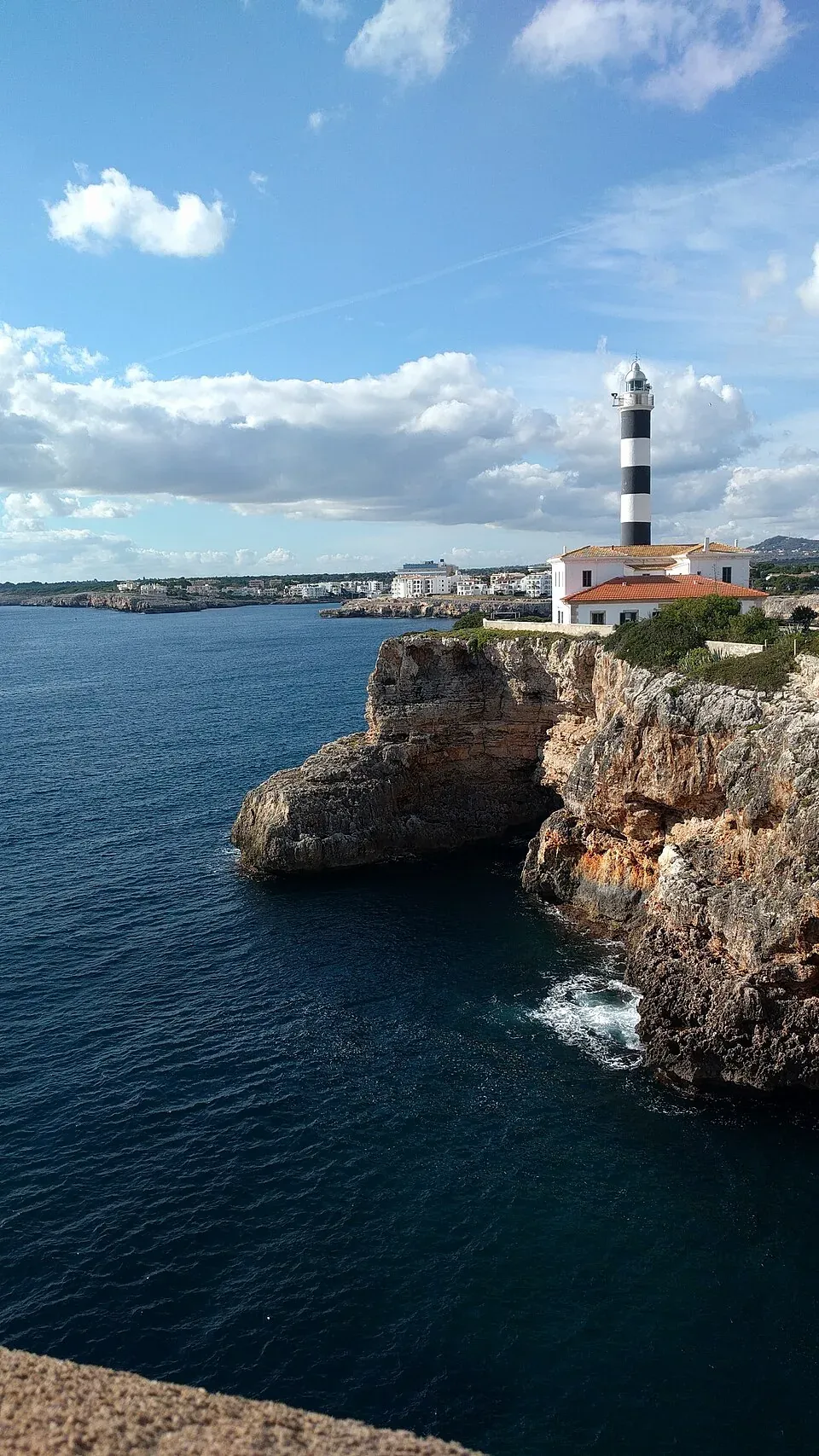
Portocolom lighthouse, first lit in 1863, marks the mouth of the bay with its black-and-white striped tower. Walking out to it along the lighthouse road is one of the classic strolls, passing s’Arenal beach and the rock pools of Baños de Cleo on the way. Just before the end is the Mirador Josep A. Grimalt, opened in 2025, with views over the whole bay. Late-afternoon light gives the best views over the harbour entrance.
History: prehistory and defences
On the edge of the village is Es Closos de Can Gaià, a Bronze Age village of navetas with free entry and information panels. In sa Punta, near the lighthouse, the base of the 1570 watchtower still stands, and the name sa Bateria recalls the 18th-century gun battery. The village’s name, by the way, doesn’t come from Columbus: see why is it called Portocolom?.
Beaches and coves
- Cala Marçal: the town’s sandy beach, in the south, with facilities and restaurants nearby. It fills up in July and August, so go early.
- S’Arenal: inside the bay on the way to the lighthouse, quieter, with harbour views.
- S’Algar: rocky shoreline for swimming off the rocks and walking. Closed shoes help.
Further south, Cala Brafi, Cala Sa Nau and Cala Mitjana can be reached on foot along the coast; see the walk to Cala Sa Nau. All the beaches are in the Beaches section.
The market
On Tuesday and Saturday mornings there’s a market by the harbour. It goes well with a coffee and the stroll to Es Riuetó.
Day trips nearby
Portocolom belongs to the municipality of Felanitx, 11 km inland, which has a Sunday market. Above Felanitx is the Sant Salvador sanctuary, which you can walk up to (walk to Sant Salvador), and the Castell de Santueri is close by. To the south, Santanyí and Mondragó Natural Park deserve a day of their own.
How long to spend
A morning on foot covers the harbour, Es Riuetó and the old quarter. Add the lighthouse, an afternoon on the beach or a meal by the water and it becomes a full day. Without a car you can see the harbour on foot, but for the lighthouse, the coves and nearby villages check the bus and getting here.
Photo credits
- Header photo: Enric, Wikimedia Commons · CC BY-SA 4.0 · adapted by Portocolom.online
- Plaça de Sant Jaume and Carrer de n’Alou in the old quarter: Enric, Wikimedia Commons · CC BY-SA 4.0 · adapted by Portocolom.online
- The church of the Mare de Déu del Carme, Portocolom: Enric, Wikimedia Commons · CC BY-SA 4.0 · adapted by Portocolom.online
- The lighthouse from the viewpoint, with Cala Marçal and Cala Barbacana behind: TheSilverSailor, Wikimedia Commons · CC BY-SA 4.0 · adapted by Portocolom.online


