
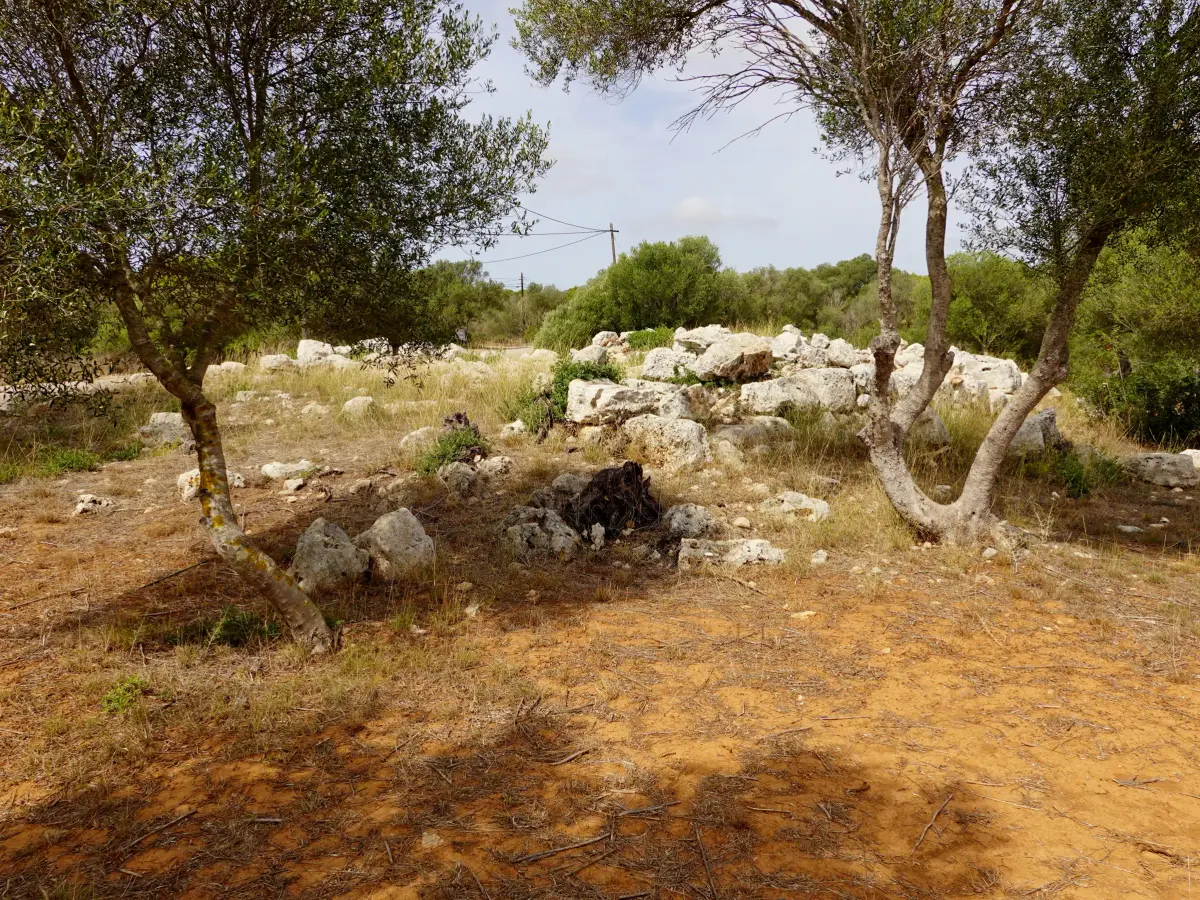
Es Closos de Can Gaià is a prehistoric settlement on the edge of Portocolom, about 700 metres from the sea and two kilometres from the harbour quay. What you see are the remains of several navetas, the long dry-stone houses of the Mallorcan Bronze Age. It was lived in continuously from 1700 to 850 BC and since 2012 has been protected as a Site of Cultural Interest in the archaeological zone category (BOIB). Entry is free and a visit takes about twenty minutes.
What a naveta is
Navetas, or naviforms, were the homes of the communities living on Mallorca before the Talayotic culture. They have a long, horseshoe-shaped plan and very thick walls for the space they enclose. That contrast, between the width of the wall and the narrowness inside, is the first thing you notice as you walk up.
Several have been excavated and consolidated at Es Closos, including a double naveta. The village was probably larger than what you see today: stretches of wall lie scattered around the central core.
The excavations
The site has been known since the early 20th century, but systematic digging began in 1996 with the Projecte Closos, run by the University of the Balearic Islands and Felanitx council, and it has been excavated every summer since (Mayurqa). Studying the animal bones from the first naveta, for example, has helped reconstruct part of its inhabitants’ diet (Arqueología y Territorio).
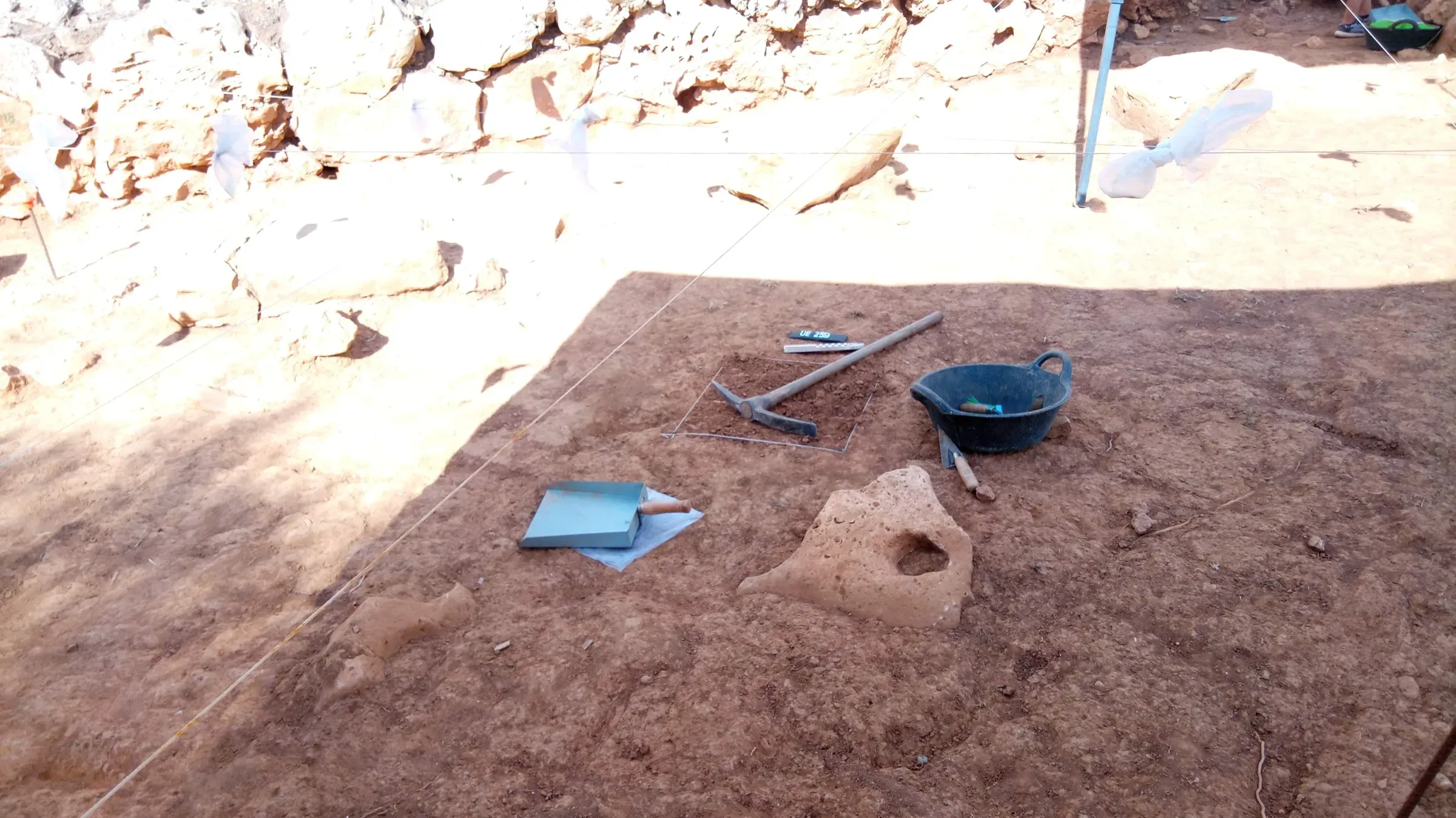
Each season ends with an open day when the team explains what they’ve found. The 31st was on 18 July 2026 (mallorca.com). The dates each year are announced by Felanitx council.
Visiting
- Entry: free.
- Route: a self-guided trail through the village with information panels and QR codes (mallorca.com), done in 15 to 20 minutes.
- Ground: earth and loose stone, with little shade beyond the wild olive trees. In summer, go early or late in the afternoon, with water and a hat.
- Respect: don’t climb on the walls or move stones; it’s a protected site.
Getting there
The site is on Carrer del Vapor Santueri, in the upper part of Portocolom between the village and the Felanitx road. The map on this page shows the exact spot.
- By car: park on the side of the street, a few metres from the entrance.
- On foot: about 2 km by road from the harbour quay, uphill at the end.
- By bus: the TIB stop at Vapor Santueri is on the same street. Routes and timetables in buses in Portocolom.
Read on
Es Closos is where Portocolom’s story begins; it carries on in the history of the harbour and the old town and harbour. To round off the day, the Castell de Santueri, on a crag occupied since prehistoric times, makes a good outing.
Photo credits
- Header photo: Olaf Tausch, Wikimedia Commons · CC BY 3.0 · adapted by Portocolom.online
- The 2021 excavation season: Joan Gené, Wikimedia Commons · CC BY-SA 4.0 · adapted by Portocolom.online


